LED wall vs outdoor TV
An outdoor TV can be simple and familiar, but screen size is limited. An LED wall is better suited to larger backyard viewing experiences where the screen becomes part of the entertaining area.
Buyer guide
A practical guide to LED walls, outdoor TVs, projectors, pixel pitch, brightness, weather exposure, controllers, audio and poolside planning.
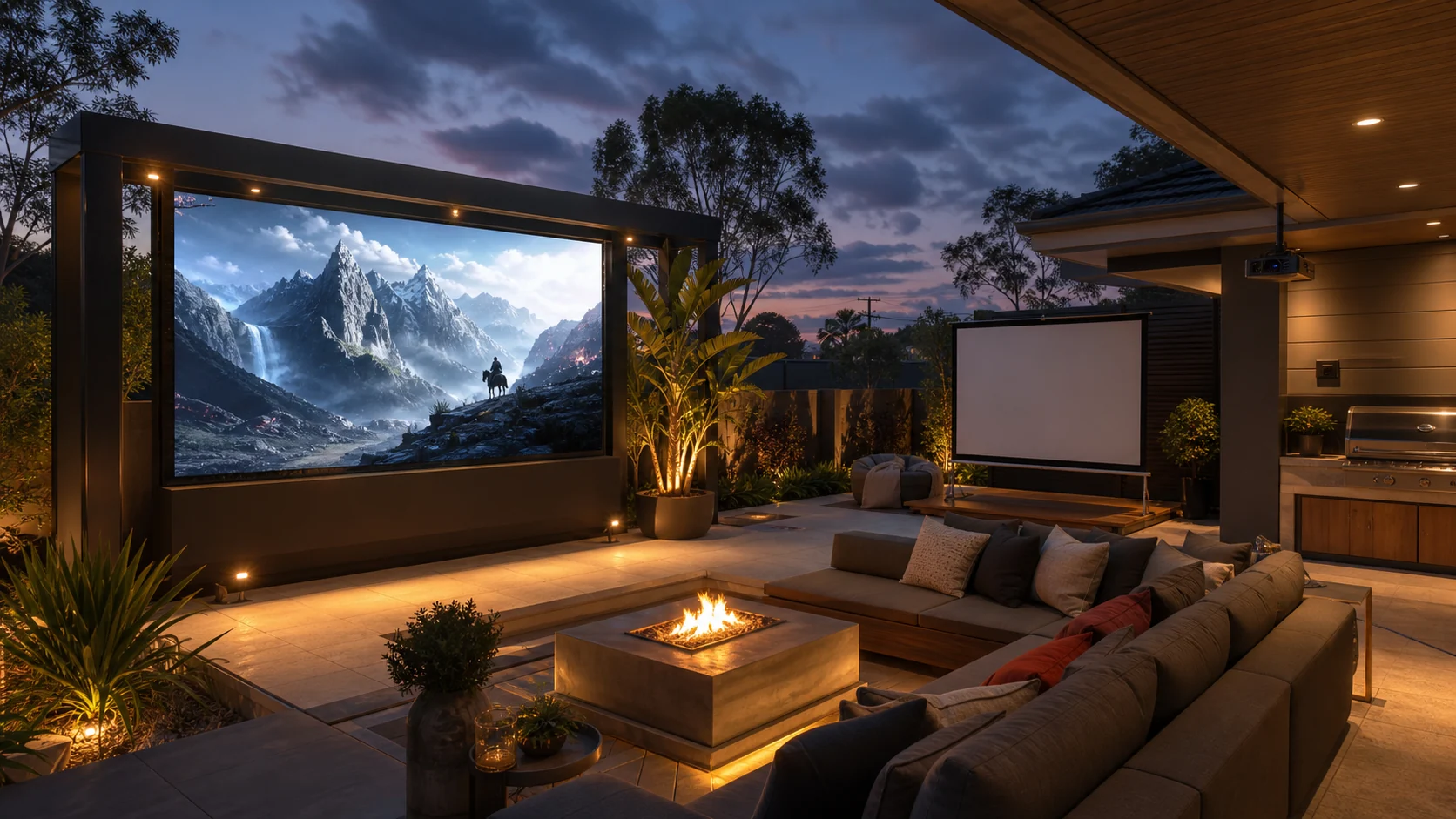
An outdoor TV can be simple and familiar, but screen size is limited. An LED wall is better suited to larger backyard viewing experiences where the screen becomes part of the entertaining area.
Projectors can work well at night, but they need the right surface, placement and light control. LED walls can be specified for brighter outdoor conditions, depending on selected hardware and screen position.
P5 is usually more cost-effective and better for longer viewing distance. P4.81 and P4 are better for sharper backyard viewing. P3.91 may suit closer viewing but costs more.
The closer people sit, the more pixel pitch matters. Larger patios and pool areas can often suit a more cost-effective pitch than close seating areas.
Outdoor brightness depends on the selected panel, screen orientation, sun direction and installation design. Daytime performance should be reviewed against the actual site.
Outdoor panels should be IP-rated and properly installed. IP-rated does not mean careless placement or unlimited exposure.
IP ratings describe protection against solids and water. The first digit relates to dust and solids, while the second relates to water protection.
Power, cabling and equipment locations need review. Controllers, amplifiers and AV gear should be protected indoors or in a weather-protected cabinet.
Poolside installations may be possible, but splash zones, electrical safety, mounting, viewing position and service access need careful planning.
Simple, smart and advanced controllers support different screen sizes and input needs. Systems may use Huidu, Colorlight, NovaStar or similar depending on package and availability.
LED screens need separate audio. Speakers may be outdoor-rated, but amplifiers and AV equipment must be installed in a protected location.
Brightness, sound, structure, placement and local requirements should be considered. Requirements may vary by location, size and use.
Pricing factors
Package prices are starting points. Final pricing can change based on screen size, pixel pitch, supplier availability, controller, audio, metallic structure, freight, site access, electrical requirements, installation complexity and warranty allowance.
The best first step is to share the space, desired screen size, viewing distance and budget range so the right package level can be identified.
Ready to compare options?
Tell us about your backyard and we'll suggest the most practical starting package.